

📶 Broadcast to Feedback Loop
FILTER/1: In an algorithmic media landscape, control is an illusion


Welcome to CO/SIGNALS[FILTER] - In this series, we filter the noise across the industry, culture, and creative partnerships to make sense of the signals that matter.
Have you ever considered that the main way you interface with information is through video? Except for reading this of course!
The first regular TV show was broadcast in 1936 (thanks BBC) and since then evolved through colour, channels, formats and quality. Fast forward through the growth of the internet, and Youtube launched in 2005 - today, over 2.6 billion people around the world use it every month. Instagram introduced video in 2013. Tiktok blew up in 2018.
Video has long been on the road to becoming the default way of interacting with content as it makes up around over 80% of global internet traffic.
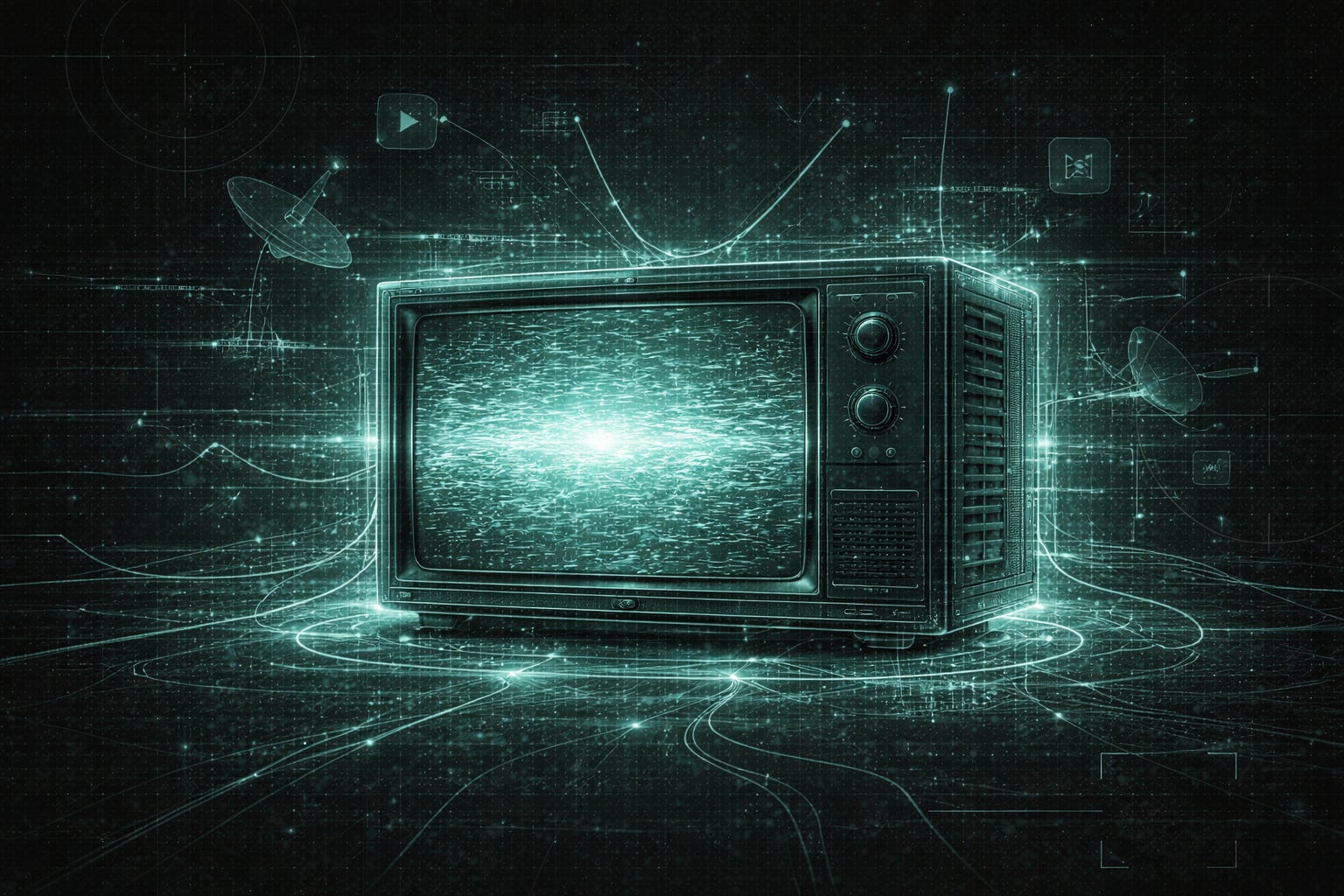
Television is no longer a format or a screen - it’s simply a mode of attention. Anything that sustains watchability, episodic relevance, and cultural conversation now behaves like TV. Ads, creator content, trailers, podcasts, livestreams and memes all compete in the same feed, under the same rules: hold attention or disappear.
See here for more: Why Everything is Television
YouTube has quietly become the new centre of gravity for television itself - It now leads total TV and streaming consumption in the US, increasingly watched on actual TVs, while also dominating podcasts, live sport, and creator-led formats. This isn’t internet video growing up - it’s TV being rebuilt from the inside out, by creators who act as studios, talent, and showrunners all at once.
See here for more: The relentless rise of YouTube (paywall)
MrBeast isn’t making 'social videos' anymore - he’s making TV. The Sidemen have built Sunday night appointment viewing on YouTube that feels closer to a series drop than a vlog. And when YouTube starts streaming NFL games, the lines blur completely.
And it goes both ways. Broadcasters like Channel 4 and BBC are uploading full episodes and creating new IP for YouTube to meet audiences where they are.
See here for more: How YouTube and its creator economy took over TV
What is a podcast anyway these days?! The reality is that they’re chat shows with better distribution - a format co-opted by creators today as they have some of the lowest barriers to entry. Camera, lights and microphones. Now, they’re distributed in different formats (audio only vs. video) as well as cut up into short-form video (which are trailers? ads? or just another way to consume the content?)
See here for more: How podcasters are taking over TV
Lionsgate turning to TikTok fan editors is the clearest admission yet that distribution now shapes creativity. Studios are conceding that attention is no longer something they can manufacture top-down. The best trailers, scenes, and story arcs are being discovered after release, through remix, meme, and algorithmic repetition on TikTok.
See here for more: Why Lionsgate Hired TikTok Fan Editors to Market Movies
Disney chops up High School Musical into 52 separate clips on Tiktok - and it’s pulled in ~35 million views in record time. Engage, and the algo does the work of resurfacing similar content, and before you know it, you’re crying out for a new film. Our take: the data on engagement with each one of the 52 clips is a valuable data source which could be fed back into script development, trailer edits, or marketing.
See here for more: Disney’s 52-part TikTok experiment
What this signals
In a fragmented algorithmic media landscape, control is an illusion. The real advantage comes from building ideas that signal clearly, move freely, and invite others to carry them forward. That’s what TV looks like now.
Not a format, schedule, or screen - but a loop. Make, circulate, remix, repeat.
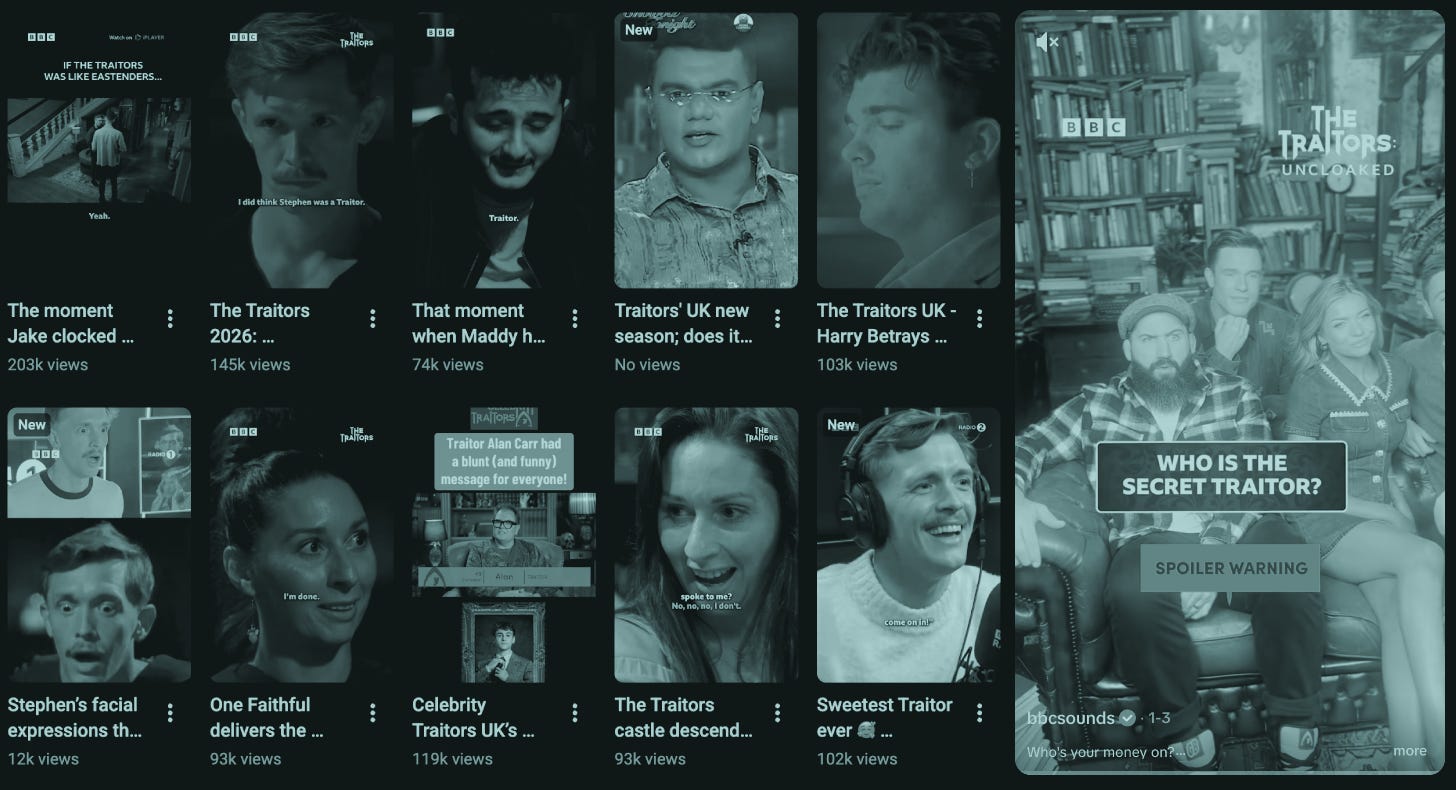
That requires seeing video differently. Not as a finished asset or a 'spot', but as a system in motion - something designed to fragment, recombine, and evolve in public. Value no longer sits in the first impression, but in what survives repetition and remixing.
Hot off the press, you can see Uber Eats exploring this idea (in a very literal way) for their 2026 Superbowl spot. More here.
Thanks for reading - there’s a lot to unpack here so we’ll explore these implications in more depth in upcoming articles. Subscribe to stay close.